
VerwonderAR: Brings art to life.
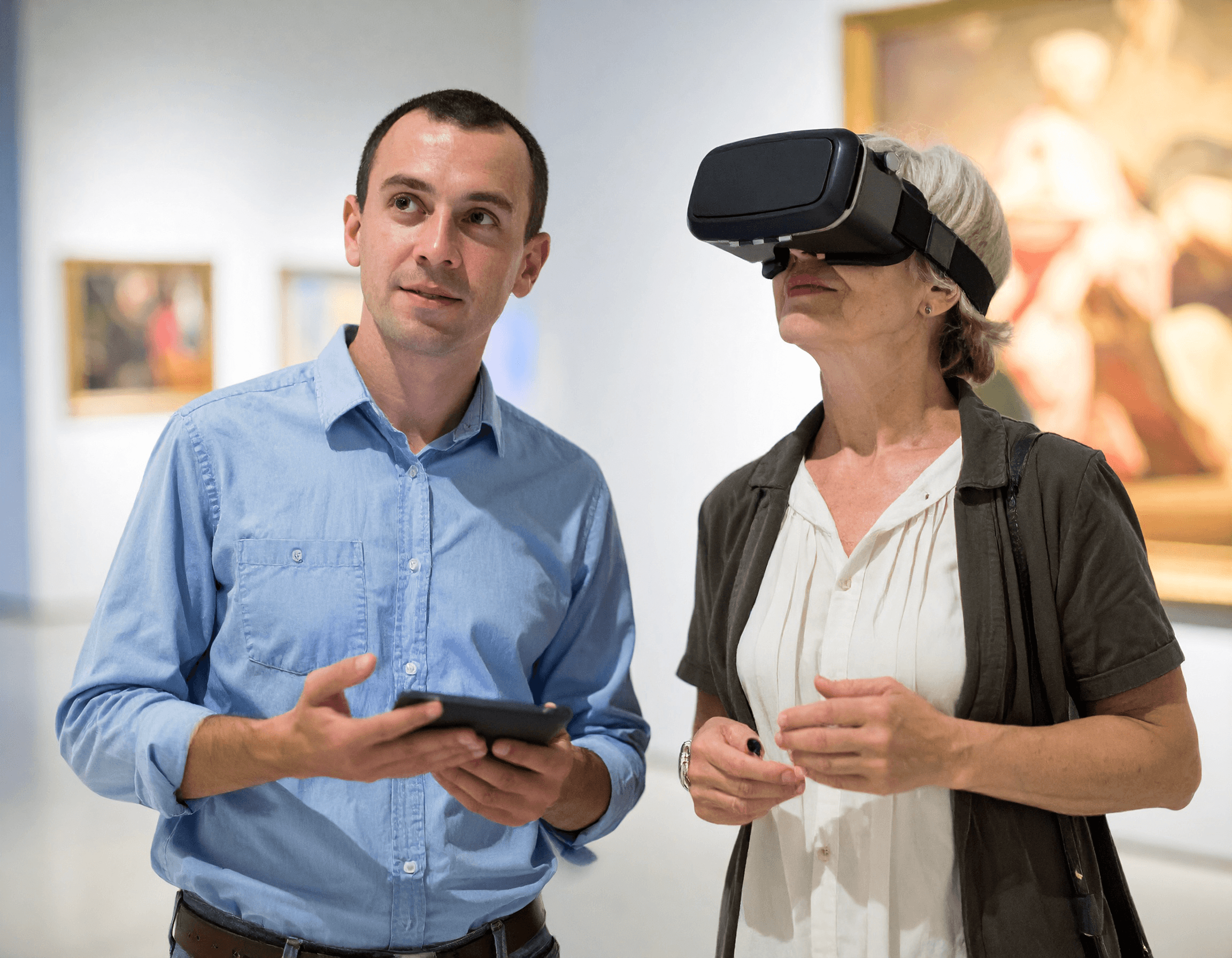
People that suffer from dementia can now experience art from a whole new dimension. The AR-glasses makes a connection with different artworks from the Dordrechts Museum and brings them to life, with help from AI…
Introduction
Today, approximately 290,000 Dutch people live with dementia, a number expected to double by 2040. For these people, cultural experiences like museum visits can be overwhelming and confusing.
The Dordrechts Museum has been working for years to become more accessible for visitors with disabilities. As a communication and multimedia Design student, I was presented this challenge with my four teammates, and we worked five months to find a solution for this problem.
The museum’s current collection isn’t sufficiently accessible for eldery people in the early stages of dementia (aged 65-75), and their needs weren’t clearly understood. On my side job I work with people with dementia, and I can see caregivers struggle to engage with their clients through activities. Sometimes these activities don’t make an impact at all…
Design process
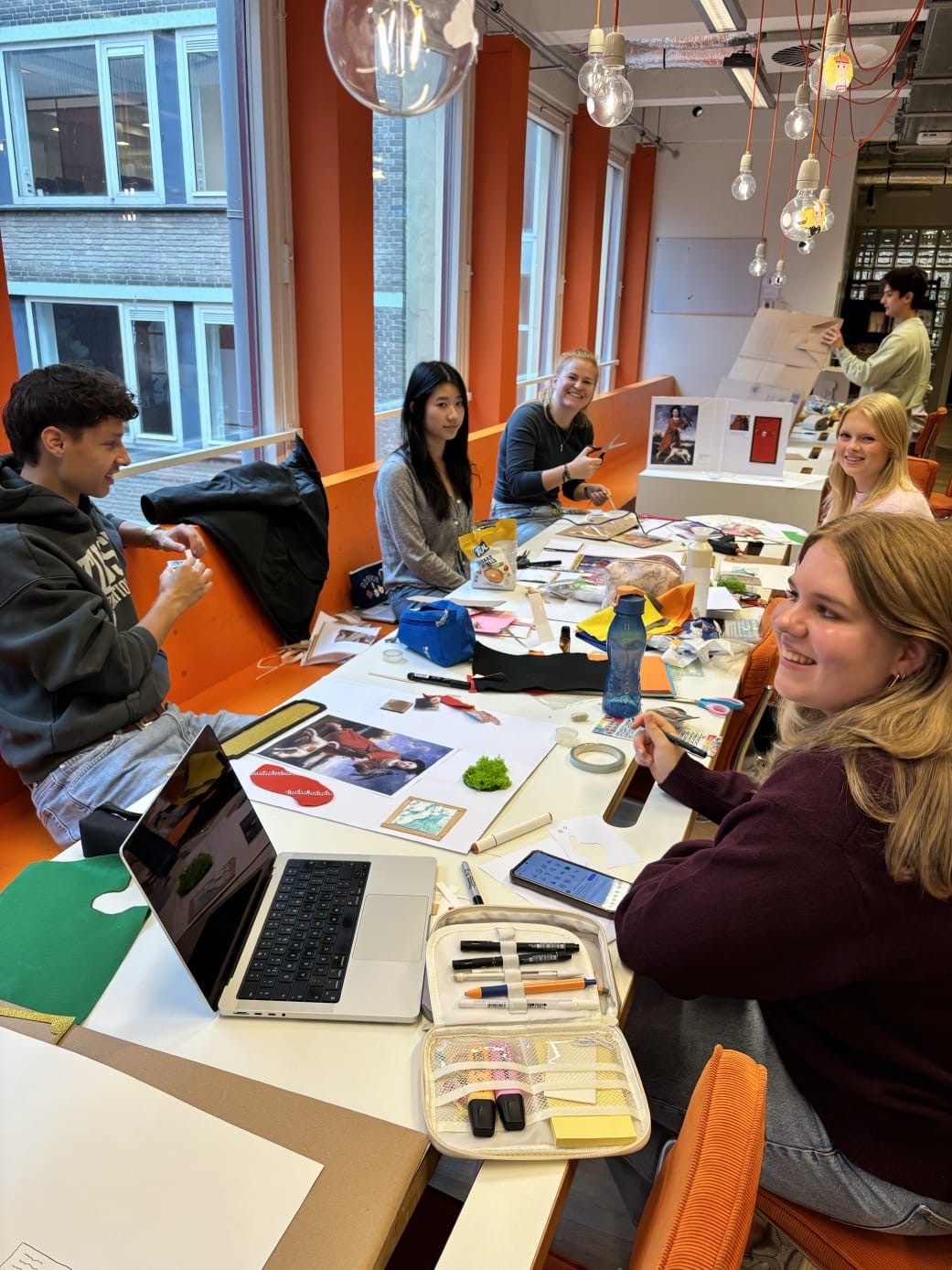
We began our process with a simple question: “How do we make art more accessible for people with dementia?”. I set up a design process that combined digital and physical research with regular client feedback.
In-depth interviews – I conducted multiple interviews with our target audience, their loved ones and caregivers to understand their wants, needs, challenges and motivations.
Immersive technology research – We explored emerging technologies like Augmented Reality and how they could be combined with Artificial Intelligence to optimize our museum experience.
Client feedback – We prioritized the museum’s vision by scheduling feedback meetings to present our progress, next steps and gather feedback.
Result
VerwonderAR was born. An immersive AR headset that brings art to life through storytelling and digital elements. Our solution helps users navigate through the museum with projected arrows and includes playful interactive elements (like a chicken character) that keep the users alert and stimulate their brains. When a user approaches an artwork, it comes to life with elements moving in 3D perspective, enhanced by spatial audio.
Reduced anxiety through guided navigation
Social interaction still possible due to AR technology
My contribution
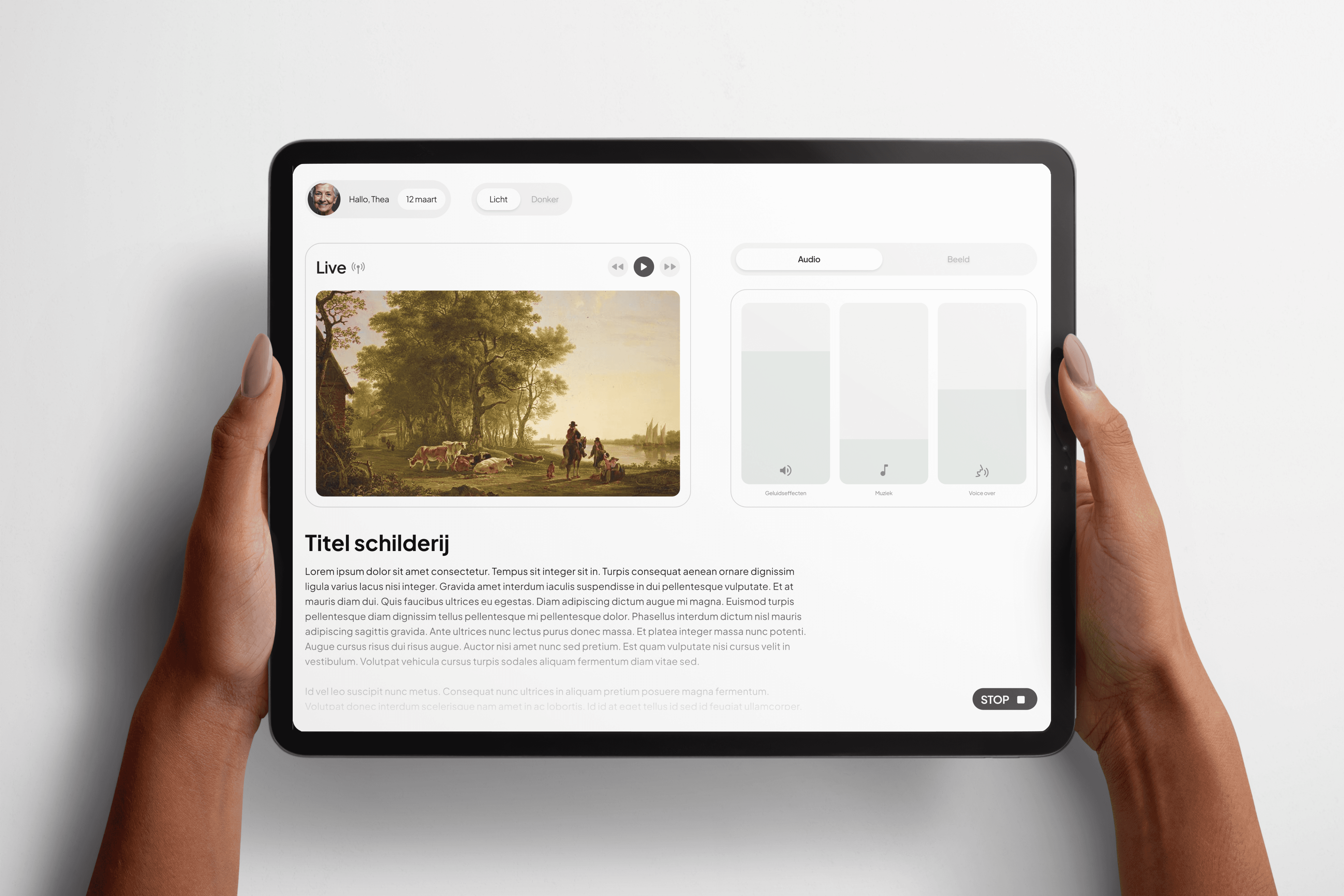
As UI / Interaction Designer for this project, I focused on developing a simple but recognizable control system. I designed an interface that gives caregivers the ability to adjust all stimuli according to the user’s needs in real time. Too many visual elements on screen? The caregiver can immediately reduce them using a slider. Is the user confused by the voice over? One click and the voice disappears.
Since the caregiver watches along with the user through a live video feed, I designed the interface to be clear and efficient. Through multiple interaction and usability test, I built a system that caregivers can master within minutes, making it easier for them to quickly adapt to different situations.
"After all, art should be accessible to everyone. Sometimes you just need to look at it differently."